Pull up a chair, grab your favorite drink, and let’s talk about something that doesn’t involve designer bags or penthouse views—but makes all of those things sweeter. I’m talking about your emergency fund. The quiet power player that sits in your savings account, waiting to give you the ultimate luxury: the freedom to walk away. After years in the sugar bowl, I’ve learned that having options isn’t just empowering—it’s essential. And that emergency fund? It’s what gives you those options.

Here’s a scene that might sound familiar: you’re sitting across from a potential sugar daddy at an upscale restaurant. Everything looked perfect on paper, but now that you’re face-to-face, something feels off. Maybe he’s pushy about boundaries. Maybe his “generous” offer suddenly comes with strings you never agreed to. Maybe your gut is just screaming “wrong.”
Without financial backup, that voice in your head starts bargaining: Maybe it’s not that bad. I need to make rent. One more date won’t hurt. But with a solid emergency fund? You can smile politely, finish your wine, and never look back. That’s the difference between surviving and thriving in this world.
I learned this lesson the expensive way—by not having that safety net when I needed it most. There was an arrangement early on where red flags popped up faster than champagne corks at a celebration. He started getting controlling, wanting access to my schedule, questioning who I spent time with. Classic possessive behavior that had nothing to do with our agreed arrangement. But I was broke, living paycheck to allowance, and I stayed longer than I should have. It cost me more than money—it cost me peace of mind.
Why every sugar baby needs an emergency fund
Let’s get one thing straight: sugar dating is not a traditional career path. There’s no HR department, no employment contract, no guaranteed income. Arrangements can end suddenly. Sugar daddies can ghost. Economic downturns happen. Your fund is your professional insurance policy in a world without safety nets.
“Financial independence is about having options. When you have options, you have power.”
— Suze Orman, financial advisor and author
Think of your emergency fund as your freedom account. It’s what allows you to be selective instead of desperate. To negotiate from strength instead of need. To walk away from situations that don’t serve you without worrying about next month’s rent.
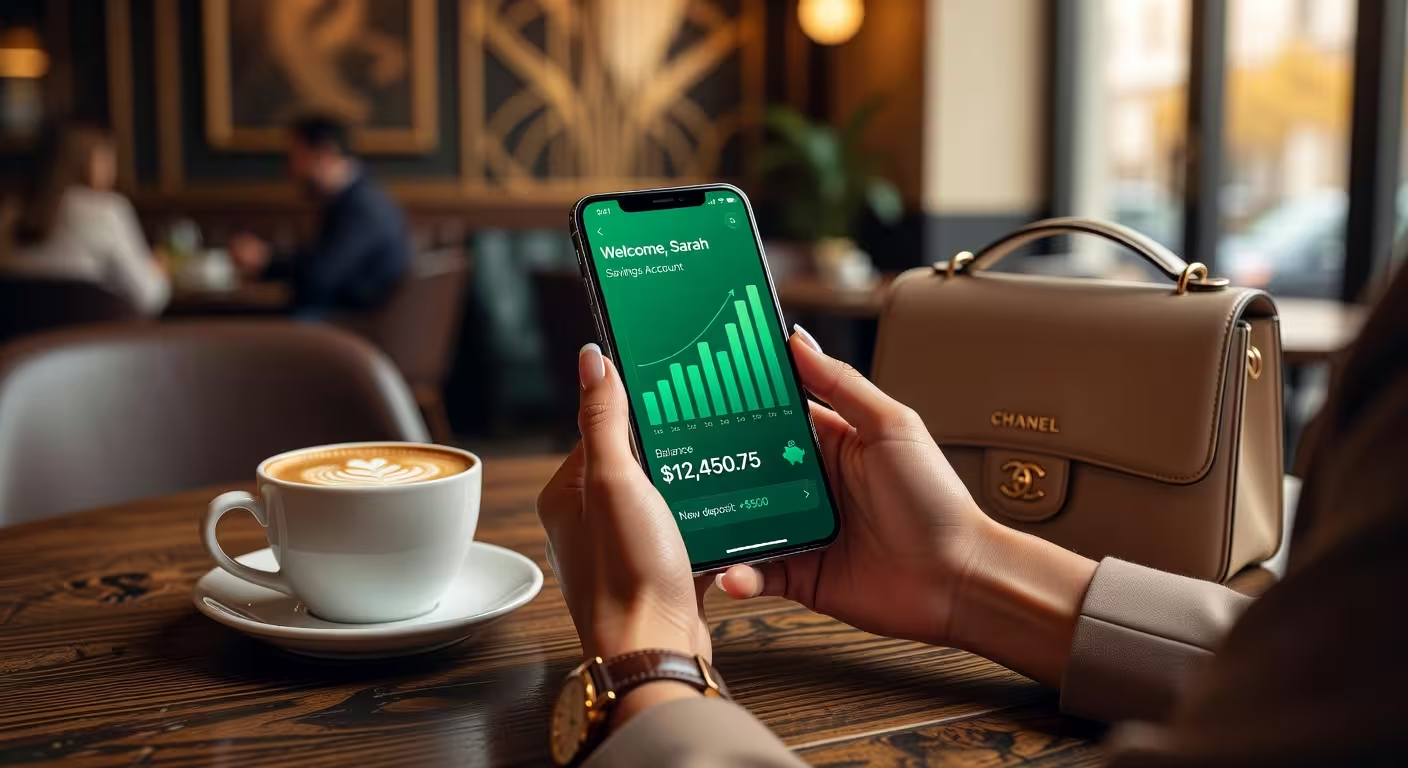
In the sugar dating world, this translates to real, tangible power. When you know you can cover your expenses for three to six months without any income, you completely change the dynamic. You’re no longer accepting arrangements out of necessity—you’re choosing them because they genuinely align with what you want. That shift in energy? Sugar daddies can feel it. And ironically, it makes you more attractive.
What nobody tells you
The most successful sugar babies I know aren’t the ones with the highest allowances—they’re the ones with the strongest financial foundations. When you’re not living allowance-to-allowance, you carry yourself differently. You negotiate better. You attract higher quality arrangements. Your emergency fund doesn’t just protect you—it elevates you.
How much should you actually save?
The standard advice is three to six months of living expenses. I’m going to tell you to aim for the higher end—six months minimum. Why? Because in sugar dating, income streams can be unpredictable. An arrangement might end suddenly. You might need time off for your mental health. Global events (hello, pandemic memories) can completely disrupt the scene.
Here’s how to calculate your number:
- List your essential monthly expenses: Rent or mortgage, utilities, groceries, phone bill, transportation, insurance, minimum debt payments. Not the fun stuff—just what you absolutely need to survive.
- Add a buffer for basics: Personal care items, basic clothing, occasional medical needs. We’re not talking spa days, just the essentials that keep you functional.
- Multiply by six: That’s your target emergency fund number. If your essentials run $2,500 monthly, you’re aiming for $15,000.
- Adjust for your situation: If you have dependents, health issues, or live in an expensive city, you might need more. Trust your gut on what feels safe.
Does that number feel overwhelming? Good. It should feel significant—because it is. But here’s the thing: building wealth as a sugar baby is completely achievable when you’re strategic about it. I went from zero savings to a fully-funded emergency account in about 18 months, and I started with just $200 per month.
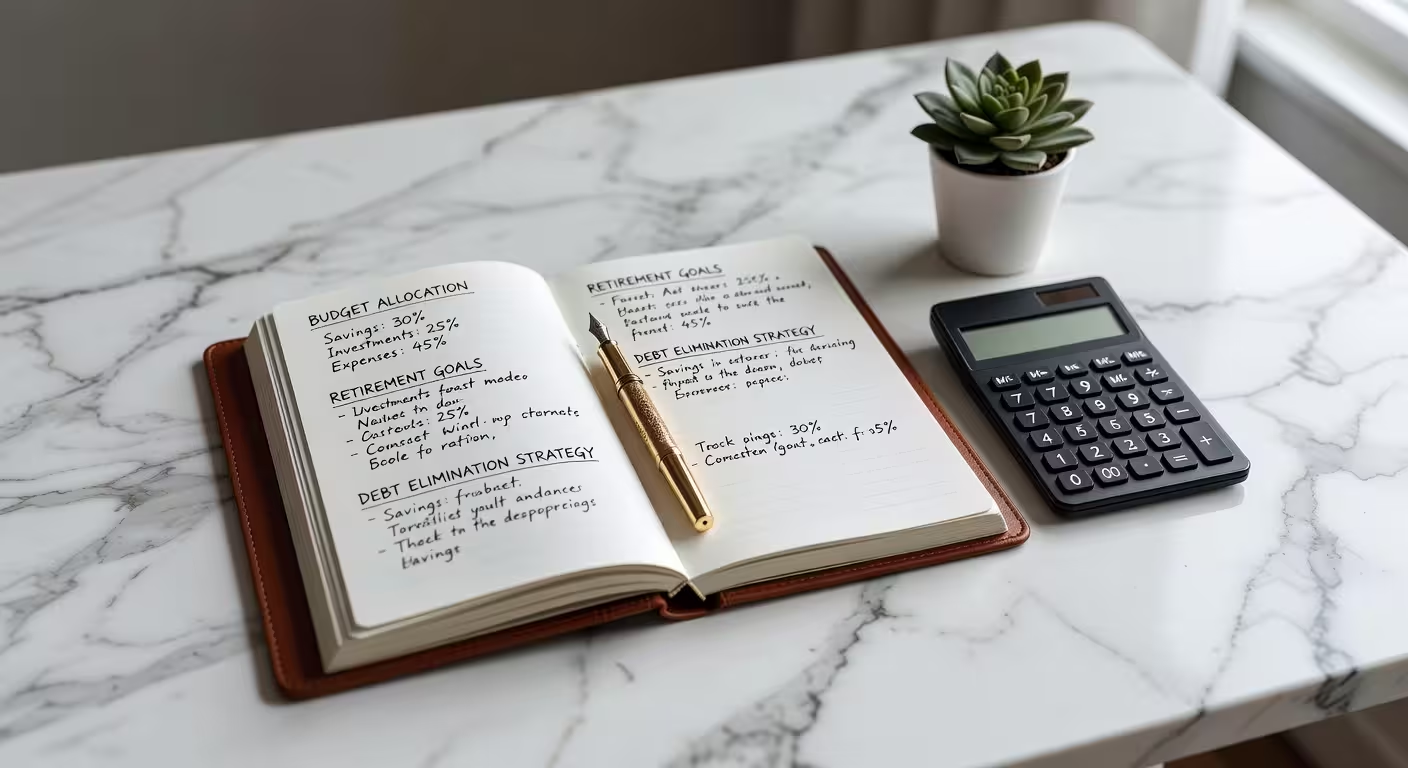
Building your fund: the actual strategy
Okay, theory is nice, but let’s talk execution. How do you actually accumulate thousands of dollars while living your life? The answer isn’t sexy, but it’s effective: consistency over perfection.
Start with the right account
Open a separate high-yield savings account that’s not connected to your checking account. You want a little friction here—not so much that you can’t access the money in a real emergency, but enough that you won’t raid it for impulse purchases. I use an online bank that offers better interest rates than traditional banks and doesn’t have a debit card attached.
Look for accounts offering at least 4-5% APY. Your emergency fund should work for you while it sits there. Depending on your current situation, that interest can add up to hundreds of dollars annually once you’ve built the fund up. Research current high-yield savings options and choose one that fits your needs.
The percentage system that actually works
Here’s my method: every time money comes in from sugar dating, 20-30% goes straight into the emergency fund. Not negotiable. Not “maybe next time.” It happens automatically, like it was never yours to begin with.
- Monthly allowance: Set up an automatic transfer for the day after you receive it. Out of sight, into the fund.
- PPM dates: Cash or Venmo received? Transfer your percentage immediately, before you even leave the restaurant.
- Gifts you monetize: Sold a designer bag or jewelry? Percentage to the fund first, then enjoy the rest.
- Unexpected bonuses: Holiday gifts, birthday surprises, extra generosity? You know where part of it goes.
Pro tip: If you’re just starting out and your allowance is modest, even 15% adds up. I started with $200-300 monthly, which felt like nothing. Two years later, I had over $20,000 saved. Small, consistent contributions compound faster than you think.
Ready to find your perfect sugar daddy?
Join thousands of successful sugar babies who have already found their ideal arrangement.
Converting gifts into savings
Not all sugar daddy generosity comes in cash, and that’s where you need to get creative. Designer handbags, jewelry, electronics—these can all become liquid assets with the right approach. I’ve turned Cartier bracelets into four-figure deposits and Chanel bags into rent money during lean months.
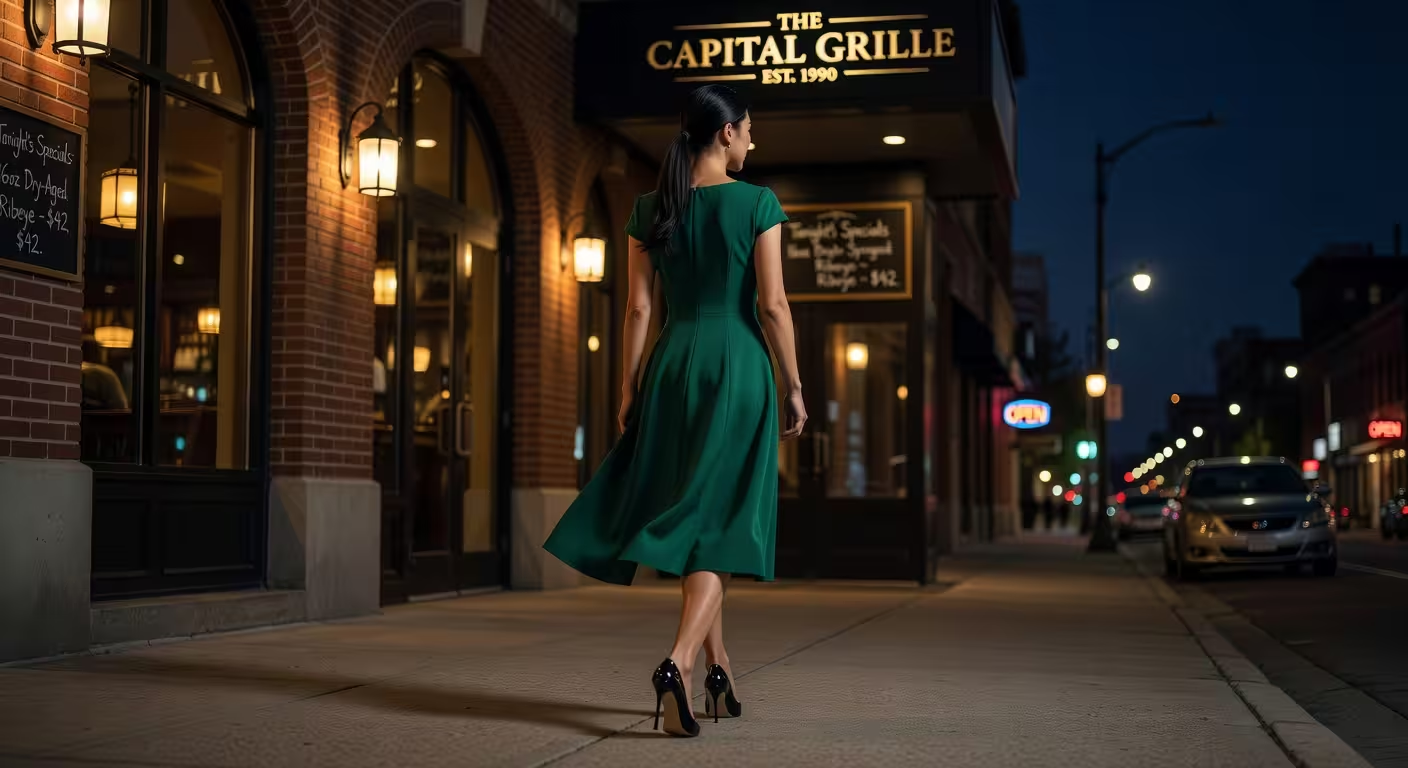
Reputable resale options include:
- The RealReal: Best for authenticated designer pieces, though they take a commission
- Vestiaire Collective: Good for European luxury brands
- Local consignment shops: Faster cash, lower prices, but immediate liquidity
- Facebook Marketplace or Poshmark: For mid-range items, surprisingly effective
The key is being strategic about what gifts you accept. If you’re trying to build savings quickly, a $5,000 Rolex that you can resell for $3,500 is more valuable than a $5,000 vacation that creates memories but no financial security. Know your priorities and communicate them clearly.
You’ll face pressure to spend everything you make on looking the part. Designer clothes, expensive beauty treatments, luxury lifestyle trappings. I get it—presentation matters in this world. But here’s what took me too long to learn: the appearance of wealth can be created strategically and affordably, while actual financial security requires sacrifice. Choose security. The sugar daddies worth having can’t tell the difference between a $3,000 dress and a $300 one styled right—but you’ll feel the difference when your savings account hits five figures.
Common mistakes that drain your fund before it grows
I’ve watched smart, savvy women sabotage their own financial security with these mistakes. Learn from our collective expensive lessons:
Lifestyle inflation
You land a generous arrangement, and suddenly your entire standard of living inflates to match. Better apartment, nicer car, upgraded everything. It feels like you’re thriving, but actually, you’re just spending more without building security. I did this spectacularly after my first high-allowance arrangement—moved to a luxury building, bought a newer car, subscribed to every premium service. When that arrangement ended six months later, I was financially worse off than before it started.
The antidote: keep your baseline expenses steady as your income grows. Let the increases go toward savings and investments, not permanent lifestyle upgrades. You can enjoy treats and splurges—just don’t lock yourself into higher fixed costs.
Lending money to friends or family
Once people know you’re doing well, the requests start coming. Sister needs help with rent. Best friend’s car broke down. Mom wants you to chip in for family vacation. Every single request feels justified, and saying no feels selfish.
“You can’t pour from an empty cup. Take care of yourself first.”
— Eleanor Brownn, author and self-care advocate
But here’s the truth: your emergency fund is for emergencies—your emergencies. Once you start dipping in for other people’s crises, you’ll never build it up. I learned to say, “I don’t have liquid funds available right now” even when I technically did. Your savings aren’t liquid—they’re locked in for your security. This boundary is non-negotiable if you want financial freedom.
Keeping everything in one arrangement
Putting all your financial eggs in one sugar daddy basket is risky business. I’ve seen arrangements that seemed rock-solid fall apart overnight—he got married, moved cities, had a financial crisis, or just got bored. If that’s your only income source and you haven’t saved, you’re suddenly scrambling.
The solution isn’t necessarily juggling multiple arrangements (though some women do this successfully). It’s about diversifying your income streams beyond sugar dating while you’re building your fund. Use the flexibility and capital from arrangements to develop side hustles, freelance skills, or business ideas that can supplement or eventually replace sugar income.
Ignoring taxes
Depending on how your arrangements are structured, you might have tax implications. Gifts are generally not taxable to the recipient, but if you’re receiving regular payments that look like income, the IRS might eventually take interest. I’m not a tax professional, but I learned to set aside an additional 10-15% in a separate account just in case. Better to have it and not need it than face penalties later.
Consider consulting with a tax professional who understands alternative income—they exist, and they won’t judge. Frame it as “consulting income” or “personal assistance” if you’re uncomfortable with specifics. The goal is protection, not perfection.
When to actually use your emergency fund
Building this fund is pointless if you’re too scared to use it when you genuinely need it. So let’s talk about what actually qualifies as an emergency in the sugar dating world:
- An arrangement turns unsafe or unhealthy: If you feel physically or emotionally at risk, use that fund to exit immediately. No allowance is worth your wellbeing.
- You need a break for mental health: Burnout is real. If you’re feeling depleted, anxious, or disconnected, taking a month or two off to recalibrate is a legitimate use of these funds.
- Medical emergencies: Obvious but worth stating—your health comes first, always.
- Your arrangement ends unexpectedly: This is literally what the fund is for. Use it to cover expenses while you find a new situation, no guilt required.
- Major life transitions: Going back to school, relocating cities, pursuing a career opportunity—if the sugar lifestyle is transitional for you, this fund enables your exit strategy.
What doesn’t qualify: wanting a luxury vacation, seeing a designer bag you love, or splurging on expensive dinners with friends. Those desires are valid, but they’re not emergencies. Save separately for fun money—keep the emergency fund sacred.
The psychology of having options
Here’s something fascinating that happened once my emergency fund was fully funded: I stopped attracting problematic situations. Or more accurately, I stopped entertaining them long enough for them to become problems.
When you’re financially desperate, you radiate that energy even if you think you’re hiding it. You accept boundary violations. You tolerate disrespect. You negotiate from weakness. Sugar daddies can sense it, and the ones with bad intentions specifically target that vulnerability.
But when you have six months of expenses saved? Your entire energy shifts. You carry yourself differently. You set boundaries clearly and enforce them immediately. You don’t chase or beg or compromise your standards because you literally don’t have to. That confidence is magnetic—it attracts better quality arrangements and repels the time-wasters.
“Power is not what you have but what the enemy thinks you have.”
— Saul Alinsky, community organizer and author
I experienced this transformation personally. Before my fund was established, I dealt with flaky potential SDs, last-minute cancellations, and disrespectful offers. Once I had financial security? Those situations evaporated. Not because the men changed—because I did. I stopped responding to red flags. I walked away faster. I demanded better, and I got it.
Beyond emergencies: building real wealth
Your emergency fund is just the foundation. Once it’s fully funded, your next move is to start building actual wealth—investments that grow, appreciate, and eventually create passive income. This is where sugar dating becomes genuinely life-changing, not just comfortable.
After hitting my six-month emergency fund target, I started directing that same 20-30% toward:
- Index funds and ETFs: Low-cost, diversified investments that grow steadily over time
- Roth IRA contributions: Tax-advantaged retirement savings that compound beautifully
- Real estate down payment fund: Building toward property ownership, which creates equity and stability
- Business investments: Funding a side business that could eventually replace sugar income entirely
The emergency fund gives you security for today. These investments create freedom for your future. Together, they transform sugar dating from a survival strategy into a legitimate wealth-building opportunity.
I know women who have used their sugar arrangements to pay off six figures of student loans, buy investment properties, fund entire business launches, and create financial independence by their early thirties. But every single one of them started exactly where you are right now—with that first $200 deposit into an emergency fund.
Your fund is your power—guard it fiercely
As your savings grow, you’ll face temptations and pressures from every direction. Friends who don’t understand will call you stingy. Family might expect financial help. Sugar daddies might suggest you don’t “need” your allowance if you’ve “saved so much.” Other sugar babies might mock you for not living more lavishly.
Ignore all of it. Your financial security is nobody’s business but yours. In fact, the fewer people who know about your fund, the better. I learned this after casually mentioning my savings to a friend, who then felt comfortable asking for a “small loan” that would have wiped out months of careful accumulation. Now? My finances are private, and my peace of mind is protected.
Protect your fund from yourself too
The biggest threat to your emergency savings might be your own impulses. In moments of stress, sadness, or celebration, you’ll be tempted to justify “just one” withdrawal for something that feels important but isn’t actually an emergency. Don’t. The integrity of this fund is what makes it powerful. Break the seal once for a non-emergency, and you’ll do it again. Keep it sacred.
Real stories from the trenches
Let me share some scenarios from my own life and friends in the sugar bowl where having this fund made all the difference:
Sophia’s story: She had been seeing the same SD for eight months when he started pushing for a sexual relationship after they’d agreed to companionship-only. She’d built up four months of expenses saved. When he wouldn’t respect the boundary, she ended it immediately and took a full month off to interview new potential arrangements without pressure. She found something better within six weeks.
My own experience: When a former SD showed up drunk to a date and became aggressive, I had the financial freedom to leave immediately, block him everywhere, and not worry about the lost income. Pre-fund me would have tried to smooth things over or make excuses. Post-fund me ordered an Uber and never looked back.
Maya’s transition: After two years of arrangements, she wanted to pursue a master’s degree full-time. Her emergency fund (which had grown to nearly $30,000) allowed her to step away from sugar dating entirely, cover her living expenses during the transition, and start her program without stress. She’s now in a career she loves, and the fund bought her that option.
These aren’t dramatic movie moments—they’re the quiet, powerful instances where having money saved changes everything. That’s what we’re building toward.
The long game: freedom on your terms
Here’s what nobody tells you when you’re starting out in sugar dating: the real goal isn’t landing the highest allowance or dating the wealthiest man. The real goal is creating a life where you don’t need any of it—but you choose it because it enhances your already stable foundation.
Your emergency fund is the first major step toward that reality. It transforms you from someone who needs arrangements into someone who selects them. From someone at the mercy of circumstances into someone who creates circumstances. From surviving to thriving.
I’ll be honest—building this fund requires sacrifice. You’ll say no to things you want. You’ll watch other sugar babies seemingly living larger while you’re directing money toward savings. You’ll question whether it’s worth it, especially during the early stages when the balance feels insignificantly small.
But I promise you, the first time you walk away from a situation that doesn’t serve you—without financial fear, without second-guessing, without wondering how you’ll pay rent—you’ll understand. The freedom to say no is worth every dollar saved, every temptation resisted, every month of discipline.
That’s the power we’re building here. Not power over anyone else, but power over our own lives and choices. In a world that often tries to make women feel powerless, especially those of us in unconventional lifestyles, financial independence is revolutionary.
So start today. Open that savings account. Make that first transfer. Commit to the percentage system. Resist the lifestyle inflation. Build your fund dollar by dollar, month by month. It won’t happen overnight, but it will happen. And when it does, you’ll have something more valuable than any allowance: the freedom to choose your own path, on your own terms, without apology or compromise.
That’s what this is really about—not emergency funds or savings accounts or financial strategies. It’s about autonomy. Agency. Power. It’s about looking at any situation—whether it’s a questionable arrangement, a boundary violation, or simply a bad day—and knowing you have the option to walk away.
Build that fund, beautiful. Your future self is counting on you. And trust me, she’s going to thank you for it.